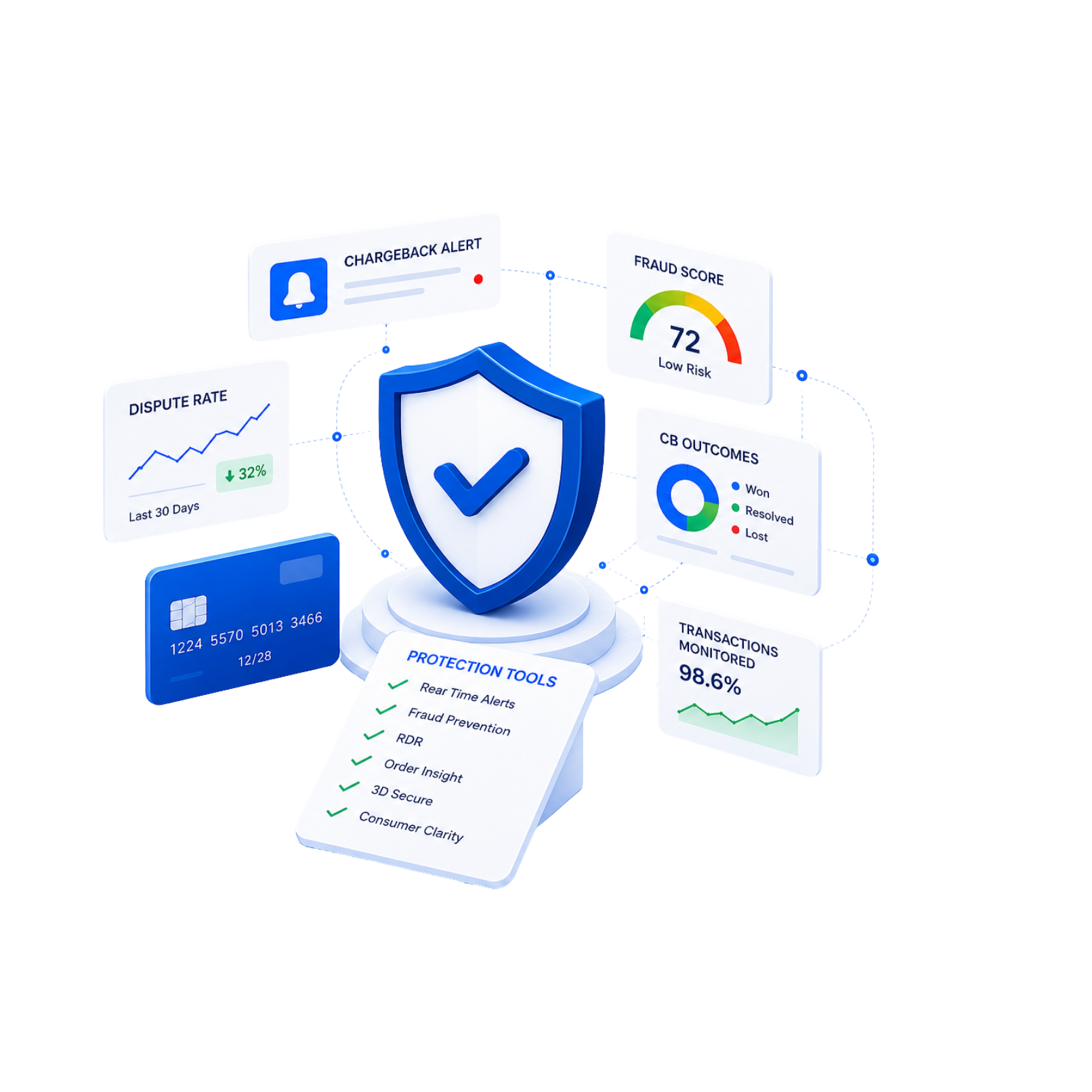
Chargeback Protection & Reduction Programs for Modern Merchants
Reduce disputes, prevent fraud, and protect your merchant account with real-time chargeback alerts, fraud prevention tools, RDR, Order Insight, 3D Secure, and merchant risk monitoring solutions.
Reducing Disputes, Fraud & Payment Risk at Scale
Chargeback protection helps businesses reduce disputes, prevent fraud, recover lost revenue, and stay ahead of Visa monitoring programs like VAMP. Pinpoint Payments combines dispute management tools, fraud prevention systems, real-time alerts, RDR, Order Insight, and operational support to help businesses reduce risk and maintain processing stability.
Choose the Right Solution for Your Business
New VAMP Changes Are Reshaping Merchant Risk
Merchants, ISOs, and payment providers are all feeling the pressure from Visa’s evolving VAMP requirements. As dispute thresholds tighten and monitoring standards become more aggressive, businesses with rising chargebacks or fraud exposure are facing:
Why Merchants Are Concerned
Visa’s updated VAMP framework now incorporates both fraud and dispute activity into a unified monitoring structure, including growing reliance on TC40 fraud reporting data. Unlike traditional chargebacks, TC40 reports can be triggered before a formal dispute is ever filed, making it difficult for many merchants to fully understand what is impacting their ratios. As thresholds tighten, businesses are facing increased pressure from:
The Industry Is Still Adapting
Many merchants, ISOs, and payment providers are still evaluating how Visa’s evolving VAMP standards and TC40 reporting changes will impact long-term merchant risk management strategies moving forward. Wondering exactly what TC40 is?
Struggling With Rising Disputes or VAMP Pressure?
Our team helps merchants implement chargeback reduction programs, fraud prevention tools, and dispute-management systems designed to reduce risk and stabilize merchant accounts under increasing processor and VAMP pressure.
Built For Businesses Facing:
Operational support for merchants experiencing rising disputes, reserve pressure, or VAMP-related monitoring concerns.
Businesses experiencing increasing dispute activity often require more than basic payment processing support. Our team helps merchants implement operational tools and dispute-management programs designed to reduce risk, improve visibility, and stabilize merchant accounts.
Rising Chargebacks
Dispute activity increasing across card-not-present or recurring transactions.
Friendly Fraud
Customers disputing legitimate purchases through their bank or card issuer.
Processor Pressure
Reserve increases, monitoring notices, or concerns about account stability.
VAMP Monitoring
Need support reducing fraud and dispute ratios under evolving card-brand standards.
eCommerce Chargebacks
Growing online transaction volume creating operational and fraud-management challenges.
Programs Built to
Reduce Disputes & Fraud Exposure
Pinpoint Payment’s proactive tools and expert team help you stay ahead of VAMP requirements—protecting your ratios and your reputation.
Proactive Alerting & Prevention
Catch risks early and reduce TC40s before they escalate.
Real-Time Tracking & Analytics
Monitor your VAMP ratio continuously with live insights.
Chargeback Representment
Track, respond to, and manage chargebacks more efficiently.
Transparent Reporting
Stay informed and compliant with clear, detailed reports.

Chargeback & VAMP FAQs
What is a chargeback?
A chargeback happens when a cardholder disputes a transaction through their issuing bank, causing the funds to be pulled from the merchant while the dispute is investigated. Excessive chargebacks can lead to monitoring program placement, reserve requirements, increased processor scrutiny, and potential merchant account instability.
Can chargebacks affect my merchant account?
Yes. High chargeback ratios can trigger additional processor oversight, reserve requirements, higher processing costs, or placement into monitoring programs such as Visa’s VAMP framework. In more severe cases, merchants may face account restrictions or termination if risk levels remain elevated.
How do chargeback protection services help reduce disputes?
Chargeback protection services help merchants reduce disputes before they escalate into formal chargebacks. Depending on the business, this may include real-time chargeback alerts, Order Insight, Rapid Dispute Resolution (RDR), 3D Secure authentication, fraud prevention tools, and ongoing risk monitoring.
Do chargeback reduction programs work for both retail and eCommerce businesses?
Yes. Chargeback reduction and fraud prevention programs can support both card-present and card-not-present businesses, including eCommerce, subscription billing, high-risk industries, specialty retail, and multi-location operations.
What is VAMP?
VAMP (Visa Acquirer Monitoring Program) is Visa’s updated monitoring framework designed to track fraud and dispute activity across merchant accounts. The program places increased emphasis on both chargebacks and fraud reporting data, including TC40 reports, as part of evaluating merchant risk exposure.
Why does VAMP matter?
As VAMP thresholds tighten, merchants with elevated dispute or fraud activity may face increased processor scrutiny, reserve requirements, additional compliance reviews, or account instability. Many businesses are now reevaluating their fraud prevention and chargeback reduction strategies as a result of these changes.
What is a TC40 fraud report?
A TC40 is a fraud notification generated when a cardholder reports unauthorized fraud activity to their issuing bank. Unlike a traditional chargeback, a TC40 can occur before a formal dispute is ever filed, making fraud exposure more difficult for many merchants to identify and monitor proactively.
How are TC40 fraud reports different from chargebacks?
Chargebacks are formal disputes that result in funds being pulled from a merchant account, while TC40 reports are fraud notifications submitted by issuing banks. Under Visa’s updated VAMP framework, both fraud reports and dispute activity may contribute to overall merchant risk evaluation.
Can merchants see TC40 fraud reports directly?
In many cases, merchants have limited direct visibility into TC40 reporting activity. Depending on the processor, gateway, fraud platform, or alert systems being used, merchants may only see portions of the data or receive delayed visibility into emerging fraud patterns.
What is RDR?
Rapid Dispute Resolution (RDR) is a dispute-prevention program that allows qualifying transactions to be automatically resolved before they become formal chargebacks. This can help reduce chargeback ratios, minimize operational disruption, and improve long-term account stability.
What is Order Insight?
Order Insight allows merchants to share transaction details directly with issuing banks during the dispute inquiry process. Providing enhanced transaction information can often help cardholders recognize legitimate purchases and reduce unnecessary chargebacks.
What industries are most impacted by VAMP?
Industries with elevated fraud or dispute exposure are often impacted the most, including eCommerce, subscription businesses, travel, nutraceuticals, vape, CBD, digital products, high-risk merchants, and businesses with recurring billing models.
What happens if my business exceeds chargeback thresholds?
Merchants that exceed acceptable dispute or fraud thresholds may face additional monitoring, reserve requirements, funding delays, processor reviews, increased fees, or account restrictions depending on the severity and duration of the activity.
How do I know which chargeback reduction programs are right for my business?
The right solution depends on factors such as your business model, industry, transaction type, dispute patterns, fraud exposure, and processing environment. Our team can help evaluate your current risk profile and recommend programs designed to reduce disputes and improve long-term account stability.
How much can this reduce my chargebacks?
Results vary, but most merchants see a meaningful drop in disputes and higher win rates when they do occur.