How to Build a Chargeback Prevention Workflow

Nico Ruggieri
Nov 18, 2026
11 min read
It's Monday morning and there are six new chargebacks in your dashboard.
Each one comes with a reason code. One says the customer never received the product. One says they didn't recognize the charge. One says fraud. You answer them one at a time, and by Friday every dispute has a response and none of them has an explanation.
A reason code is where the investigation starts. It tells you what the cardholder or the bank reported. It doesn't tell you what actually happened in your business: a late shipment, a product page that promised too much, a renewal nobody saw coming, a cancellation that was hard to find, or a real stolen card.
A chargeback prevention workflow is a routine for finding that out. It collects your dispute data, investigates what is behind it, matches the fix to the real cause and puts the right tool at the right stage of the payment. The goal is bigger than winning disputes. It's using chargeback data to understand your business, improve it and protect it.
Here's the order that works.
What Is a Chargeback Prevention Workflow?
A chargeback prevention workflow is a repeatable routine that turns dispute data into decisions. You collect every dispute with its context, investigate the cause behind it, fix that cause with the right mix of operational and technological changes, and respond to open disputes within their deadlines. It treats chargebacks as information about your business, not as a pile to process.
Step 1: Collect Every Dispute With Its Context
Before you can investigate anything, you need the full picture of each dispute in one place. Alerts and disputes are time-sensitive, so review and record each one as it arrives. The broader analysis happens on a schedule: weekly for patterns, monthly for the bigger picture. For each dispute, record:
- The reason code and the card network
- The amount, the purchase date and the dispute date
- The product or plan involved
- How the customer found you (channel, ad, referral)
- Fulfillment details: when it shipped, when it arrived, who delivered it
- Any contact the customer had with your support team before the dispute
- What the charge looked like on their statement
Don't just count disputes. A count tells you how many. The context tells you why.
Step 2: Investigate What the Data Is Telling You
The reason code is a starting point. The same reason code can come from very different problems, so each one needs a question behind it.
| What the dispute says | What the data may reveal | Where to look |
|---|---|---|
| Item not received | A fulfillment delay, a shipping problem or a wrong address | Order time versus ship time, carrier tracking, delivery exceptions |
| Not as described | Product quality issues, inaccurate website copy or misleading marketing | Product pages, ads, support tickets, returns |
| Didn't recognize the charge | A confusing billing descriptor, billing confusion or a purchase by someone else in the household | Descriptor versus your brand name, confirmation emails, who placed the order |
| Canceled but still charged | A cancellation problem or a renewal the customer didn't expect | Cancellation path, reminder emails, cancellation timestamps |
| Fraud or unauthorized | Genuine fraud or first-party misuse, where the customer made the purchase and disputes it anyway | Device and IP match, delivery address history, prior undisputed orders, login and usage records |
| Refund not received | A slow or missed refund | Refund log, processing times |
Then ask a few questions of the data as a whole:
- Is this one customer or a cluster of customers?
- Is it tied to a product, a plan, a channel or a time period?
- Did something change recently: a new ad, a new carrier, a new checkout flow, a price change?
- Does the evidence say the customer was right?
- Could this be first-party misuse, where the customer made the purchase themselves?
No single signal proves first-party misuse. A matching address, a passed fraud check or a history of earlier purchases is a piece of evidence, not proof on its own. Stolen-card fraud can pass the same checks, and a customer with past purchases can still have a real complaint. Weigh the signals together and keep an open mind about what the data is telling you.
Investigation and response happen at the same time. Disputes and alerts have deadlines, set by the card networks and your processor, so time-sensitive items are reviewed and answered as they arrive. The weekly and monthly analysis looks for the pattern behind them. Correcting a shipping problem and responding to this week's disputes don't compete with each other. You do both.
We used this approach in our guide to chargeback prevention for supplement merchants, where we trace where disputes actually begin in one industry.
Step 3: Match the Fix to the Cause
Once you know the cause, the fix usually becomes clear. Sometimes it's operational. Sometimes it's technological. Often it's both.
| Cause the data points to | Possible fix | Type |
|---|---|---|
| Late or lost shipments | Change the carrier or packing process, send tracking updates | Operational |
| A product page or ad that promises more than the product delivers | Rewrite the copy, adjust the offer | Operational |
| Customers don't recognize the charge | Clearer billing descriptor, better order confirmation, transaction recognition tools | Both |
| Renewal or billing surprises | A reminder before each charge, clearer terms at signup | Operational |
| A cancellation path that's hard to find | Simplify it and confirm every cancellation in writing | Operational |
| Stolen-card fraud | Checkout fraud screening, address and security code checks, 3D Secure | Technological |
| Fraud concentrated in a region, a customer segment or a type of order | Targeted restrictions or extra verification where the data supports them | Both |
| First-party misuse | Stronger order and usage evidence, pre-dispute alerts, rule-based resolution | Both |
Technology follows the problem. A tool is worth adding when your data shows a problem it solves, not because it exists or because your processor sells it. A pre-dispute alert can't fix a late shipment, and a better carrier can't stop a stolen card.
Step 4: Know Which Stage Each Tool Works At
Prevention and response tools work at different points in a payment's life. They are complementary, not interchangeable. Using one where another belongs is a common reason merchants feel like their tools aren't working.
| Stage | What happens | Examples | What it can't do |
|---|---|---|---|
| Before and during the transaction | The customer checks out and the payment is authorized | Address and security code checks, 3D Secure, fraud screening such as Kount (some tools also monitor risk after authorization) | Help a customer who doesn't recognize a legitimate charge |
| After the purchase, before a dispute | The cardholder asks their bank about a charge | Transaction recognition, such as Visa Order Insight and Mastercard's Ethoca Consumer Clarity | Stop a dispute caused by a real problem with the order |
| When a dispute starts | The bank logs a dispute but no chargeback exists yet | Pre-dispute alerts, such as Ethoca Alerts and Verifi | Fix the cause of the dispute |
| Automated resolution | A dispute is settled by rules you set | Visa Rapid Dispute Resolution (RDR) | Replace your judgment about which disputes to fight |
| After a chargeback is filed | You respond with evidence | Chargeback management and representment | Prevent a chargeback that already exists |
A few notes on what each stage does:
- Transaction recognition helps the cardholder understand a charge before it becomes a dispute. Visa describes Order Insight as a way for participating issuers to request receipt and order details from the merchant when a cardholder questions a charge. Mastercard describes Consumer Clarity as a way to show merchant names, logos and purchase details inside issuer banking apps.
- Pre-dispute alerts tell you a dispute has started so you can resolve it directly, often with a refund, before it turns into a chargeback. Report the outcome back through your alert provider, so the dispute doesn't continue and the customer isn't refunded twice. Our Ethoca vs. Verifi guide explains how they differ.
- RDR lets you set rules for disputes that get refunded automatically. Because RDR resolves the dispute with a refund, you don't refund the customer a second time. We cover when that fits and when it doesn't in RDR vs. Chargebacks.
- Checkout tools such as 3D Secure add authentication to the purchase. How liability works when a transaction is authenticated depends on the network, the transaction and the type of dispute, so ask your processor how it applies to your account.
- Chargeback management and representment is its own discipline. It's how you respond after a chargeback exists. It doesn't prevent anything, and prevention doesn't replace it.
Step 5: Treat Monitoring Ratios as a Warning Light
Card networks and processors watch dispute ratios. Visa's Acquirer Monitoring Program (VAMP), for example, measures card-not-present fraud reports plus disputes against settled transactions. That is a simplified description. The official calculation is subject to applicable exclusions and additional program criteria, such as minimum counts, so a ratio you work out from your own dashboard may not match the one Visa applies. Visa publishes the details in its program fact sheet and its program update. Thresholds and effective dates in programs like this change, and your processor may apply its own limits that aren't published.
Those thresholds mark where a network starts an enforcement conversation. They aren't a safe operating target, and a ratio under a threshold doesn't mean your disputes are healthy.
A formal chargeback ratio also shows only part of the picture. A lower ratio doesn't necessarily mean fewer customers are disputing transactions, because alerts, RDR resolutions and refunds can settle a dispute before it becomes a chargeback. To see the full picture, track these together:
- Fraud reports
- Pre-dispute alerts received and how each was resolved
- RDR resolutions
- Refunds issued because of a dispute
- Formal chargebacks
- The dollar amount of disputed transactions
- What prevention tools and dispute handling cost you
A rising number in any of them is a signal to investigate, not a number to manage around.
Ask your processor two things: how do they calculate your ratio, and which programs apply to your account? Then track your own numbers with the same math, reviewing alerts and disputes as they arrive and the trends weekly and monthly. Understanding your data is the only way to see a problem long before anyone else does.
Step 6: Decide How to Respond to Each Dispute
Not every chargeback should be contested, and the investigation from Step 2 tells you which ones.
When the data shows the customer was right and no chargeback has been filed, refunding the transaction directly or through a pre-dispute alert usually costs less than a chargeback. That is a different decision from accepting or contesting a chargeback that already exists. Once a chargeback is filed, don't also refund the customer outside the dispute process. Accept the chargeback or contest it, so the customer isn't paid twice. Before you refund any transaction, check whether a dispute or alert is already open on it, and ask your processor how to handle one that is.
When the data shows the customer made the purchase, or the product was delivered as described, build the evidence: proof of delivery, accepted terms, usage records, prior undisputed orders, and any support conversation. These are supporting evidence. None of them independently proves the customer made the purchase.
Deadlines are set by the card networks and your processor, and they vary by dispute type. Build an evidence folder before you need one, so the proof isn't scattered across your store, your email and your shipping system when the clock starts.
Disputes can also arrive well after the purchase, and the window depends on the dispute type and the network. That's why holiday sales can show up as chargebacks in the new year. Ask your processor for the windows that apply to your dispute types.
Step 7: Review the Data Every Month
Alerts and disputes get handled as they arrive. Once a month, step back from the individual cases, go back to your records and ask three questions:
- Did the fixes we made change the pattern?
- Is there a new cause we didn't see last month?
- Are any disputes still arriving that we expected to stop?
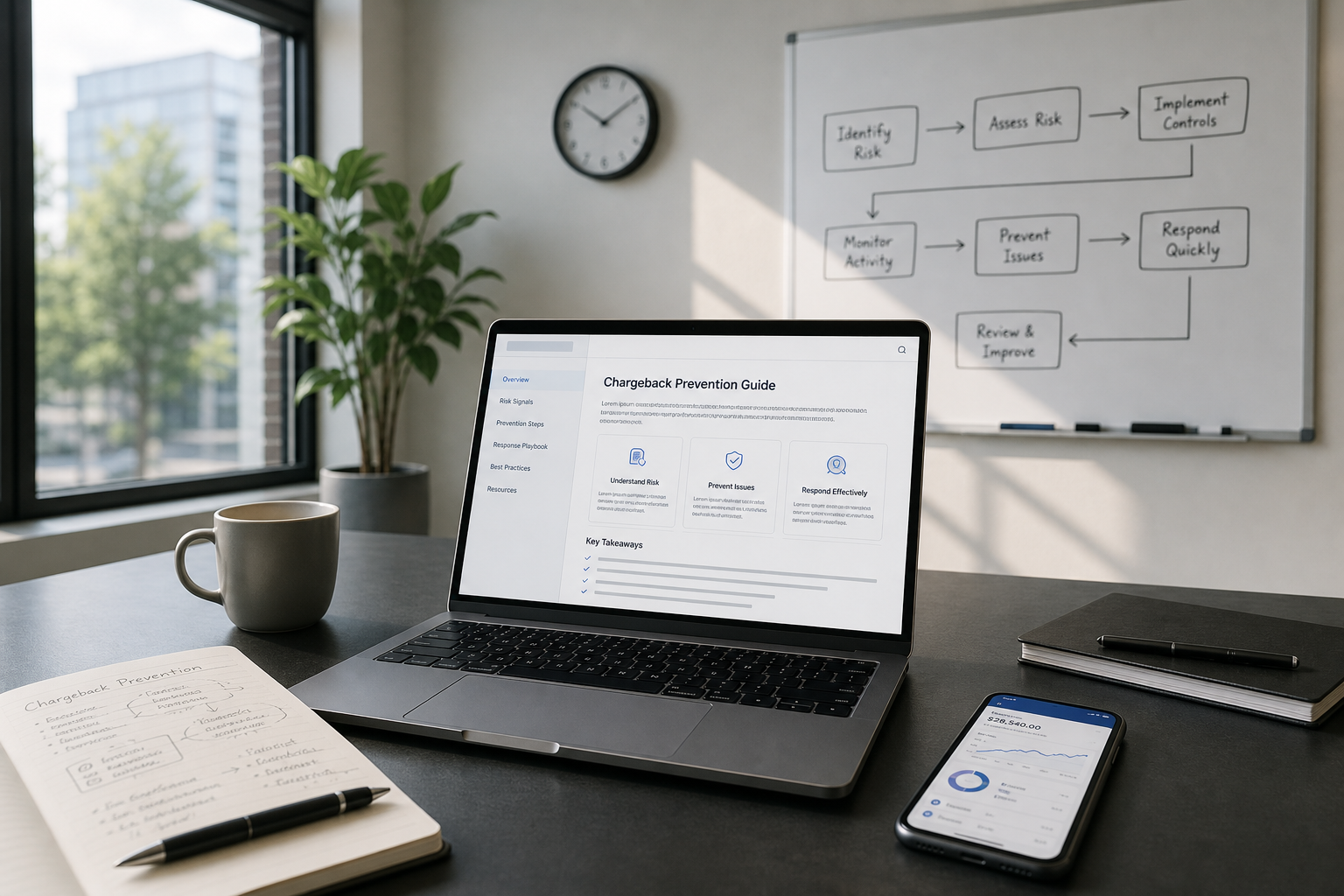
If a fix didn't change the pattern, the investigation missed something. Go back to the data. That's the whole loop: collect, investigate, fix, protect, review.
How Pinpoint Payments Helps With Chargeback Prevention
For more than 13 years, Pinpoint Payments has worked with merchants who manage chargebacks. In that time we've learned that the answer is rarely a product. It's usually in the data.
We help merchants read their dispute data, investigate the patterns behind it and decide what to change. Sometimes the answer is a better shipping update. Sometimes it's clearer billing. Sometimes it's fraud screening or pre-dispute alerts, or a combination. We start with what the data shows and recommend tools only when the data calls for them.
If your disputes are climbing and you're not sure why, talk to Pinpoint Payments. We'll look at your dispute data with you, help you find the cause and talk through the options, whether or not they involve a new tool.
What to Ask Your Processor
A workflow only works if your account gives you the information to run it. These are the questions we'd want answered:
- Can I get my dispute data in a format I can analyze, including reason codes and dispute dates?
- How do you calculate my chargeback ratio, and which monitoring programs apply to my account?
- Can I see my ratio during the month, not just after it?
- Which pre-dispute and transaction recognition tools are available on my account, and which card networks do they cover?
- How much time do I have to respond to each type of dispute?
- If a transaction already has an open alert or dispute, how should I handle a refund so the customer isn't paid twice?
- Who helps me with evidence when I decide to fight?
- Who do I talk to if my numbers start climbing?
Frequently Asked Questions
What is a chargeback prevention workflow?
It's a routine you run every week or month to collect your dispute data, investigate the cause behind it, fix that cause with the right mix of operational and technological changes, and respond to open disputes on time. It treats chargebacks as information about your business, not as a pile to process one at a time.
How do I find out why customers are filing chargebacks?
Start with the reason code, then investigate what's behind it. Record the product, channel, fulfillment details and customer history for each dispute, then look for patterns. The same reason code can come from a shipping delay, inaccurate website copy, billing confusion, a cancellation problem, genuine fraud or first-party misuse. Each one has a different fix.
What is the difference between chargeback prevention and chargeback management?
Prevention works before a chargeback exists: fixing the causes, screening at checkout, helping customers recognize charges and resolving disputes before they escalate. Chargeback management, or representment, is how you respond after a chargeback is filed. They are separate and complementary.
Do I need pre-dispute alerts, RDR or 3D Secure?
It depends on what your data shows. These tools work at different stages. 3D Secure and similar checks work at checkout, transaction recognition and pre-dispute alerts work before a dispute becomes a chargeback, and RDR resolves disputes by rules you set. A tool helps when your data shows a problem it solves. Ask your processor what's available and how each applies to your account.
What is the difference between Ethoca and Verifi?
Both offer ways to learn about a dispute before it becomes a chargeback. Ethoca is owned by Mastercard and describes itself as brand-agnostic. Verifi is owned by Visa, and some of its solutions can handle non-Visa disputes too. Coverage depends on your processor, and some merchants need more than one.
What chargeback ratio is too high?
It depends on who is measuring. Card networks run monitoring programs, such as Visa's VAMP, that count fraud reports and disputes against settled transactions, subject to applicable exclusions and additional program criteria described in Visa's documentation. Thresholds and effective dates change, and your processor may apply its own limits. These thresholds are where a network starts enforcement, not a safe target. A lower formal chargeback ratio doesn't necessarily mean fewer customers are disputing, so also track fraud reports, alerts, RDR resolutions, refunds, disputed amounts and prevention costs. Ask your processor how they calculate your ratio and which programs apply to you.
Should I fight every chargeback?
No. Investigate first. If the data shows the customer was right, accepting the chargeback may make sense, and if no chargeback exists yet, a refund before one is filed usually costs less. If it shows the order was delivered as described, build your evidence and respond within the deadline.
Should I refund a customer who has already filed a chargeback?
Not outside the dispute process. A refund before a formal chargeback is filed is different from accepting or contesting a chargeback that already exists. If you refund the customer directly after a chargeback is filed, they can end up paid twice. Check whether a dispute or alert is open before you refund, and ask your processor how to handle a transaction that already has one.
Does a matching address or a passed fraud check prove a customer is lying?
No. Matching addresses, successful fraud checks and previous purchase history are useful evidence, but none of them independently proves friendly fraud. Stolen-card fraud can pass the same checks, and a customer with past purchases can still have a real complaint. Weigh the signals together.
How long after a purchase can a customer file a chargeback?
It depends on the dispute type and the network, and some arrive weeks or months after the purchase. Ask your processor for the windows that apply to your dispute types, and keep your records for at least that long.