Ethoca vs. Verifi: Which Pre-Dispute Solution Do You Need?

Nico Ruggieri
Oct 7, 2026
8 min read
If you're trying to prevent chargebacks, you've probably heard the same two names: Ethoca and Verifi.
That often leads merchants to a simple question:
Which one do I need?
For many merchants, it isn't an either-or decision.
Mastercard owns Ethoca, but Ethoca describes itself as brand-agnostic. Visa owns Verifi, but some Verifi solutions can handle both Visa and non-Visa pre-disputes. Mastercard
The better question is:
What happens when one of your customers starts disputing a transaction, and how much of that activity can your current setup catch before it becomes a chargeback?
That's what merchants should understand before deciding which pre-dispute tools they need.
What Is a Pre-Dispute Alert?
A pre-dispute solution gives a merchant an opportunity to address certain customer disputes before they progress through the traditional chargeback process.
Think about a subscription customer who doesn't recognize a renewal.
Instead of the merchant first learning about the problem when a formal chargeback appears, a pre-dispute solution may provide an earlier opportunity to identify the transaction and resolve the issue.
Depending on the solution and the case, that might mean issuing a refund, stopping fulfillment, providing additional transaction information, or automatically resolving an eligible dispute according to rules established for the merchant.
But here's an important distinction:
Not every pre-dispute product does the same thing.
Some provide alerts.
Some can automatically resolve eligible disputes.
Some provide better transaction information to issuers and cardholders so confusion can be resolved before a dispute progresses.
Understanding those differences is more useful than simply asking whether your processor "has Ethoca" or "has Verifi."
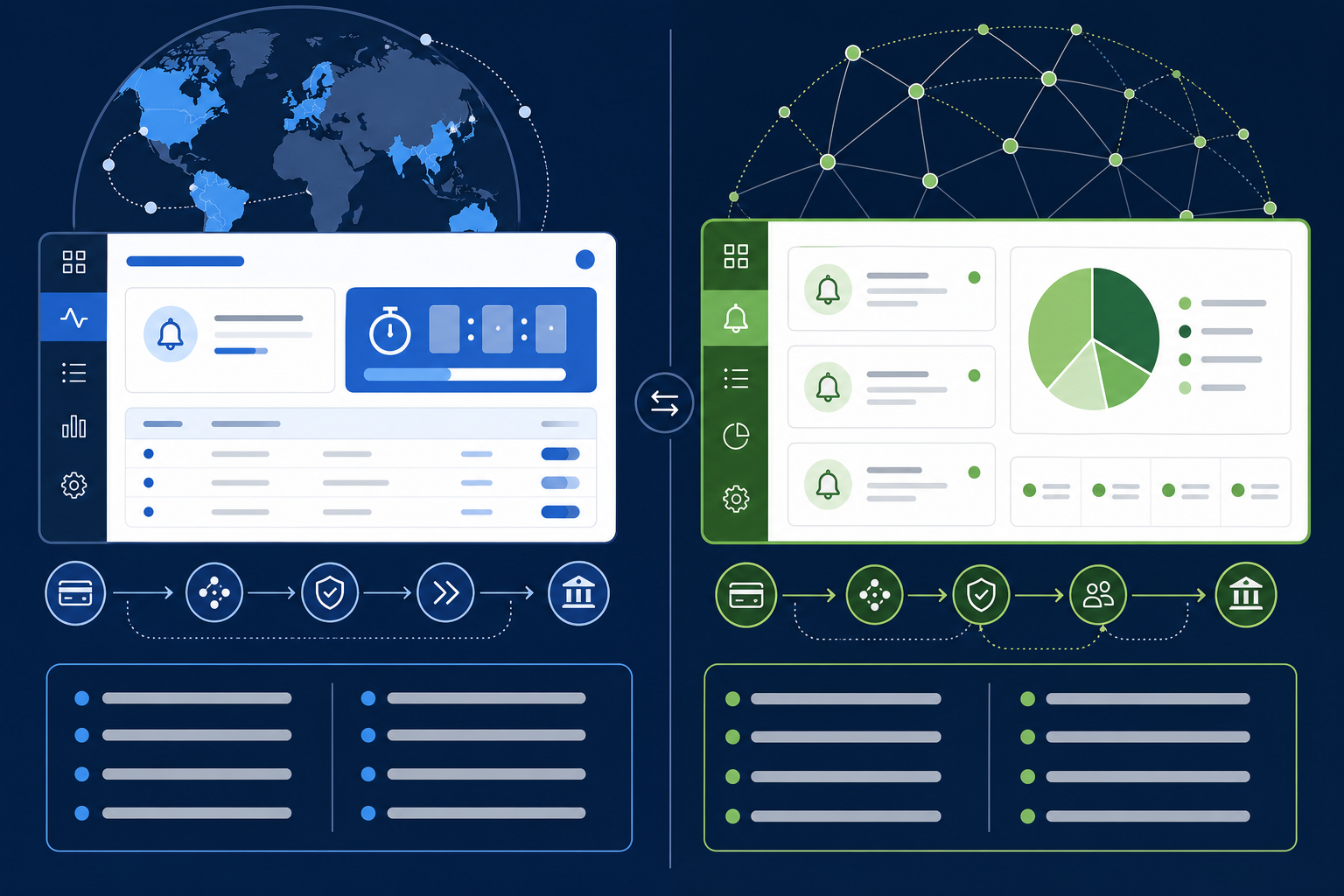
Is Ethoca Only for Mastercard and Verifi Only for Visa?
No.
This is one of the biggest misconceptions about the pre-dispute ecosystem.
Ethoca is owned by Mastercard, but Mastercard describes Ethoca as brand-agnostic. Ethoca Alerts connects merchants, acquirers and issuers to share dispute information earlier in the process. Mastercard
Verifi is owned by Visa, but not every Verifi solution is limited to Visa. Verifi's Cardholder Dispute Resolution Network, or CDRN, can handle Visa and eligible non-Visa pre-dispute cases from participating issuers. Rapid Dispute Resolution, or RDR, is specifically designed for eligible Visa pre-disputes.
So the simple formula:
Mastercard = Ethoca
Visa = Verifi
doesn't accurately describe how these products work.
There can be overlap. There can also be differences in issuer participation, transaction eligibility, geography, merchant enrollment, and how a particular dispute is handled.
That's why merchants should think about coverage and workflow, not just vendor names.
What Is Ethoca Alerts?
Ethoca Alerts provides near-real-time fraud and customer dispute information through Ethoca's network.
When an eligible alert is received, the merchant has an opportunity to act before the issue progresses into a chargeback.
Depending on the situation, that can include stopping fulfillment, investigating the transaction, addressing the customer issue, or issuing a refund when appropriate. Mastercard describes Ethoca Alerts as connecting merchants and issuers earlier in the dispute process so businesses can respond before a chargeback occurs. Mastercard
For the merchant, the important question isn't who owns Ethoca.
It's:
How much relevant dispute activity is your setup able to see early enough for you to do something about it?
What Is Verifi CDRN?
Verifi's Cardholder Dispute Resolution Network, or CDRN, is a pre-dispute resolution solution.
CDRN can handle eligible Visa and non-Visa pre-dispute cases from participating issuers. Participating sellers are given a response window to resolve eligible cases through a seller-initiated refund.
That makes CDRN different from receiving a traditional chargeback and deciding whether to fight it.
The merchant is being given an opportunity to resolve an eligible dispute earlier.
And that distinction matters.
Once a dispute becomes a formal chargeback, you're dealing with chargeback management.
Before that point, you're still trying to prevent or resolve the dispute before it gets there.
What Is Rapid Dispute Resolution, or RDR?
RDR takes a different approach.
Rather than requiring the merchant to manually review every eligible case, Rapid Dispute Resolution can automatically decision eligible Visa pre-disputes according to established criteria.
That doesn't mean:
Every dispute gets automatically refunded.
The point is to establish in advance how certain eligible disputes should be handled.
The right strategy depends on the business, its margins, the transaction, the dispute, and the economics of resolving the issue compared with allowing it to proceed further through the dispute process.
For some merchants, automatic resolution of certain eligible cases can make sense.
For others, more selective decisioning may be appropriate.
The important thing is understanding what is being automated and why.
What Are Order Insight and Ethoca Consumer Clarity?
There's another layer of chargeback prevention that happens even earlier.
Sometimes a customer isn't trying to commit fraud.
They simply don't recognize the transaction.
Maybe the billing descriptor looks unfamiliar. Maybe they don't remember the purchase. Maybe another person in the household made it.
That's where transaction-clarity tools can help.
Ethoca Consumer Clarity can provide enhanced purchase information through participating banking experiences, including clearer merchant information, digital receipts and subscription information. Mastercard positions the product around helping consumers recognize purchases and reducing disputes caused by transaction confusion. Mastercard
Visa's Order Insight addresses the same broader problem from within Visa's ecosystem by providing enhanced transaction and order information that can help issuers and cardholders better understand a purchase.
This creates an important distinction.
The best time to stop a chargeback may be before the customer ever files a dispute.
Then comes the opportunity to resolve eligible disputes at the pre-dispute stage.
Only after those opportunities are exhausted do you get into traditional chargeback management and representment.
Those are different parts of the process.
What's the Difference Between Chargeback Prevention and Chargeback Management?
They aren't the same thing.
Chargeback prevention happens upstream.
That can include:
- Clear billing descriptors
- Renewal reminders
- Easy cancellation
- Responsive customer service
- Fraud controls
- Transaction and order visibility
- Pre-dispute alerts
- Rules-based pre-dispute resolution
Chargeback management happens after a chargeback exists.
That's where evidence, reason codes, representment and recovery come into play.
A merchant can be excellent at fighting chargebacks and still have a poor chargeback-prevention strategy.
Ideally, fewer disputes should reach the point where they need to be fought at all.
Does Every Dispute Generate an Ethoca or Verifi Alert?
No.
This is an important limitation to understand.
Having a pre-dispute solution enabled does not mean every customer dispute will generate an alert or be eligible for pre-dispute resolution.
Coverage can depend on the solution, participating issuers, card network, transaction, merchant enrollment and other eligibility requirements.
That's why asking:
"Do I have chargeback alerts?"
isn't enough.
Better questions are:
Which pre-dispute solutions are enabled?
What transactions and issuers can they reach?
What happens when an eligible case is identified?
Which cases require us to act?
Which can be resolved automatically?
And what happens when a dispute isn't covered?
Those answers tell you much more than the logo on the service.
Can You Use Ethoca and Verifi Together?
Potentially, yes.
Because these aren't simply identical networks divided between Mastercard and Visa, merchants may use multiple solutions as part of a broader dispute-prevention strategy.
The goal shouldn't be collecting as many dispute tools as possible.
It should be making sure the tools you have provide appropriate coverage for the transactions you're processing and that you understand how each one is being used.
There may be overlap between solutions, which makes implementation and management important.
If you're using multiple pre-dispute services, ask your processor or provider:
How does my specific setup handle overlapping cases?
How are refunds and resolutions tracked?
What safeguards are in place to prevent us from taking action twice on the same transaction?
Don't assume the answer is the same across every implementation.
Do Pre-Dispute Solutions Affect Visa VAMP?
They can.
Visa's Acquirer Monitoring Program, or VAMP, measures applicable fraud and dispute activity on card-not-present VisaNet transactions.
Visa's current methodology excludes disputes resolved through pre-dispute solutions from the VAMP calculation, contingent on the timing of the data extract and applicable program rules. Visa Corporate
That makes pre-dispute resolution relevant beyond simply avoiding the operational cost of an individual chargeback.
But merchants shouldn't approach RDR or other pre-dispute tools simply as a way to make a ratio look better.
If customers keep disputing transactions for the same reason, there may still be a problem upstream.
Maybe the descriptor is confusing.
Maybe renewal communication is weak.
Maybe cancellation is difficult.
Maybe fraud controls need work.
Maybe customers aren't getting what they expected.
A pre-dispute tool can resolve a dispute. It doesn't necessarily resolve why the dispute happened.
That's the part merchants shouldn't lose sight of.
Is Ethoca Better Than Verifi?
That's usually the wrong way to evaluate them.
Ethoca and Verifi provide different products, networks and workflows across the pre-dispute process.
For most merchants, the goal shouldn't be choosing a winner.
It should be understanding:
- What pre-dispute coverage you currently have
- Which issuers and transactions your setup can reach
- Which disputes require merchant action
- Which eligible cases can be resolved automatically
- How quickly your team needs to respond
- How overlapping coverage is handled
- What happens when a dispute isn't covered
- Whether the same dispute reasons keep appearing
That's a much more useful conversation than simply asking whether Ethoca or Verifi is better.
What Should You Ask Your Payment Processor About Pre-Dispute Alerts?
You shouldn't need to become an expert in issuer participation, network infrastructure and dispute-routing technology to protect your business.
Your payments partner should be able to explain the setup in plain English.
Ask:
- Which pre-dispute solutions are currently enabled on my account?
- Do I have Ethoca Alerts, Verifi CDRN, RDR, or another solution?
- What types of transactions can each solution cover?
- Which cases require action from my team?
- Which cases can be resolved automatically?
- How quickly do we need to respond?
- How are overlapping alerts or resolutions handled?
- How do I see whether these tools are actually reducing my chargebacks?
- What happens to disputes that aren't covered?
- What are the most common reasons my customers are still disputing?
That last question may be the most important one.
Because the goal isn't just to stop chargebacks from reaching your ratio.
It's to understand why they're happening and prevent as many as possible from starting in the first place.
How Pinpoint Approaches Pre-Dispute Strategy
At Pinpoint Payments, we don't think merchants should have to choose between Ethoca, Verifi, RDR and other dispute tools by reading product pages and trying to piece together how everything works.
That's our job.
We look at the business, how it bills customers, where disputes are coming from, the economics of resolving versus fighting them, and the prevention tools already in place.
Then we help determine which layers make sense.
For one merchant, automatic resolution of certain eligible disputes may make sense.
For another, more selective handling may be appropriate.
And sometimes the biggest opportunity isn't another dispute product at all.
It's fixing the billing descriptor, renewal communication, cancellation experience, fraud controls, fulfillment process, or another problem creating disputes upstream.
Pre-dispute technology is powerful.
But the best chargeback is still the one your customer never feels the need to file.
Frequently Asked Questions
Is Ethoca only for Mastercard transactions?
No. Mastercard owns Ethoca, but Mastercard describes Ethoca as brand-agnostic. Ethoca's dispute-management products connect merchants, acquirers, issuers and partners rather than simply operating as a Mastercard-only alert service. Mastercard
Is Verifi only for Visa transactions?
No. Not every Verifi product is Visa-only. Verifi CDRN can handle eligible Visa and non-Visa pre-dispute cases from participating issuers. RDR, however, is specifically designed for eligible Visa pre-disputes.
What is the difference between CDRN and RDR?
CDRN gives participating sellers an opportunity to resolve eligible pre-disputes within an established response window. RDR uses established decisioning criteria to automatically handle eligible Visa pre-disputes.
The important distinction for a merchant is merchant-directed response versus automated decisioning.
Does RDR automatically refund every dispute?
No. RDR uses decisioning criteria to determine how eligible Visa pre-dispute cases should be handled. Merchants should understand how those criteria are configured rather than assuming every dispute will automatically be resolved.
Do I need both Ethoca and Verifi?
There isn't a universal answer.
The appropriate setup depends on factors including your transactions, issuer coverage, dispute patterns, existing tools and how you want eligible disputes handled.
Because coverage can overlap, your provider should be able to explain what each solution adds to your specific setup and how overlapping cases are managed.
Are pre-dispute alerts the same as chargeback management?
No.
Pre-dispute solutions are designed to prevent or resolve eligible disputes before they progress into traditional chargebacks.
Chargeback management deals with disputes that have already reached the chargeback stage, including evidence collection, representment and recovery.
Will Ethoca, Verifi or RDR stop all chargebacks?
No.
Not every transaction or dispute will be eligible or covered. Pre-dispute tools should be one layer of a broader prevention strategy that includes clear billing, customer communication, fraud controls, cancellation and refund processes, fulfillment practices, and responsive customer support.
The goal isn't simply to get better at stopping chargebacks after customers dispute. It's to give fewer customers a reason to dispute in the first place.




.svg)
.svg)
%201.svg)