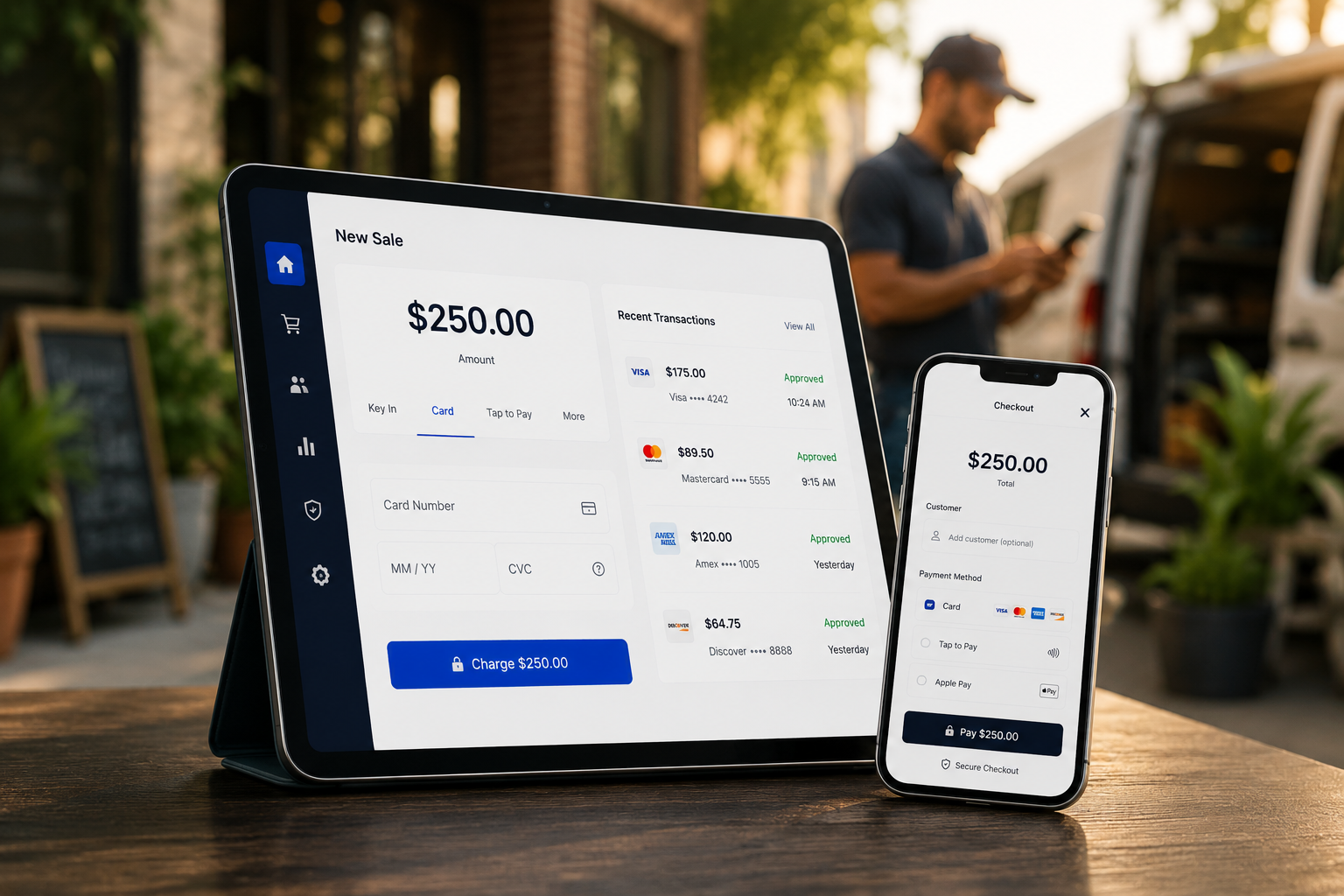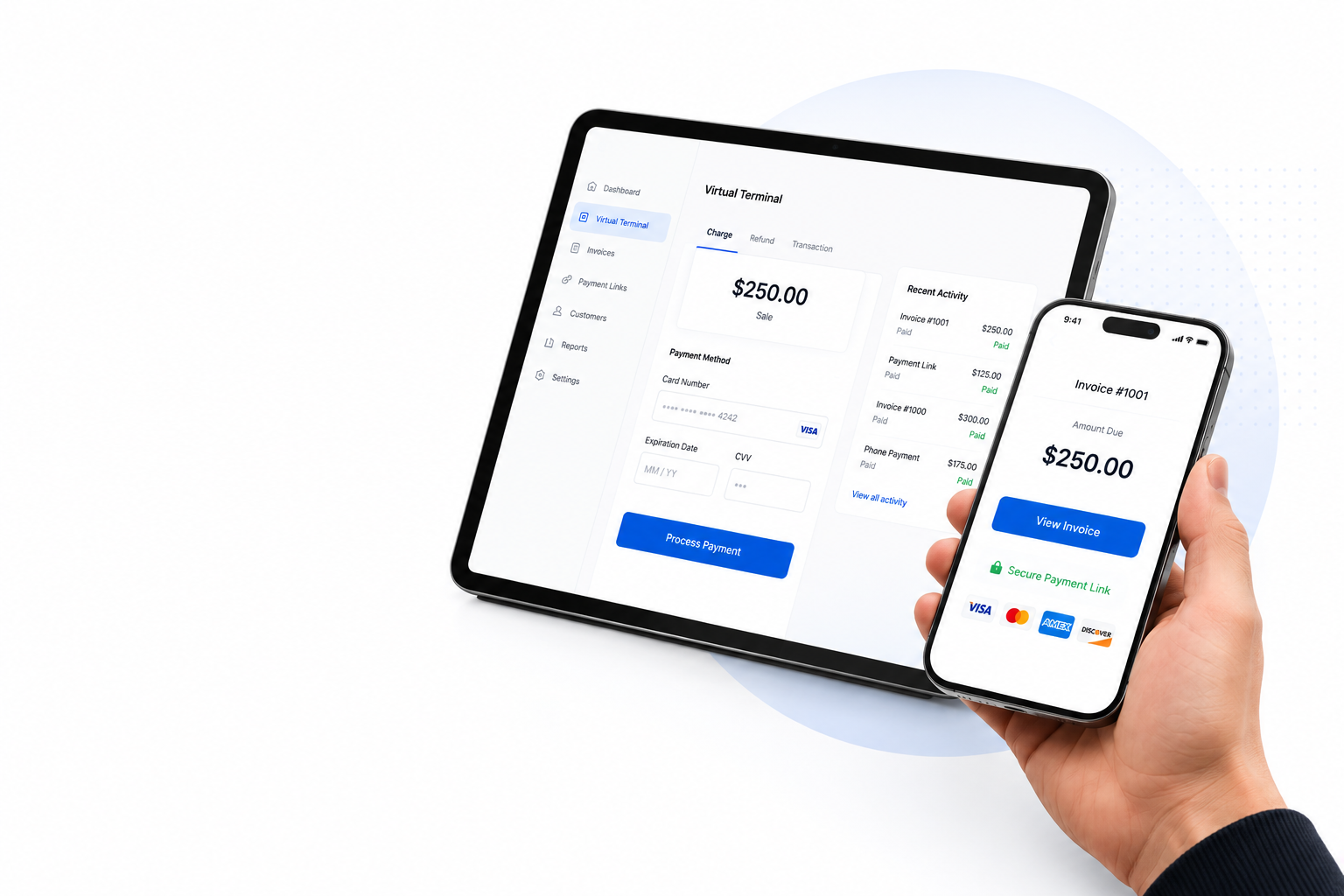
Accept Payments Without a Card Reader
Accept payments by phone, email, invoice, or secure payment link—no hardware required. Whether you're billing customers remotely or collecting deposits before the job begins, Pinpoint makes getting paid simple.

Three Ways Businesses Get Paid Without a Card Reader
Every business accepts payments differently. Choose the path that best matches how your customers pay today.

Getting Paid Remotely Comes With
Different Challenges
Whether you're taking payments over the phone, sending invoices, or collecting deposits before work begins, your payment process should be fast, secure, and easy for your customers to complete.
Businesses that rely on remote payments need more than a way to process transactions. They need tools that simplify billing, accelerate cash flow, and make getting paid effortless.
Phone Payments
Customers shouldn't have to visit your office just to pay. A secure virtual terminal lets you kley in card payments over the phone quickly and professionally.
Slow Invoice Payments
Waiting days—or weeks—for checks or unpaid invoices slows your cash flow. Digital invoices make it easier for customers to pay immediately.
Missed Payment Opportunities
When customers are ready to pay, the process should take seconds. Payment links eliminate unnecessary back-and-forth by letting customers pay securely from any device.
Disconnected Billing
Invoices, phone payments, payment links, receipts, and reporting should all work together from one platform instead of requiring multiple systems.
Trusted by Business Owners Everywhere
Getting paid remotely should be just as simple as getting paid in person. Whether you're taking payments over the phone, sending invoices, or sharing secure payment links, you need technology that makes it easy for customers to pay and easy for your business to stay organized.
Recognized nationally for outstanding customer service delivered daily by our US based operations team.
Continue Exploring Payment Solutions
Find the technology, services, and guidance your business needs to accept payments, improve performance, and prepare for growth.
Accept Payments
Explore solutions based on where and how your customers pay.
Optimize Payments
Improve costs, risk management, approvals, and performance.
Frequently Asked Questions About Virtual Terminals & Online Invoicing
What is a virtual terminal?
A virtual terminal is a secure, web-based payment tool that allows businesses to manually enter a customer's credit or debit card information without needing a physical card reader.
Virtual terminals are commonly used for:
- Phone orders
- Mail orders
- Professional services
- Deposits
- Customer service payments
- Remote billing
As long as you have an internet connection, you can securely process payments from virtually anywhere.
Can I accept credit card payments using my phone?
Yes. Compatible smartphones can accept contactless card and digital wallet payments using Tap to Pay technology without requiring additional hardware.
For businesses that also need to accept chip cards, swipe cards, or process larger transaction volumes, mobile card readers and wireless terminals are also available.
The best solution depends on how and where your business gets paid.
What's the difference between a virtual terminal and a payment gateway?
Although they're often mentioned together, they serve different purposes.
A virtual terminal allows you to manually process payments through a secure web interface.
A payment gateway connects your website, shopping cart, or software application to the payment processing network so customers can complete transactions online.
Many businesses use both depending on how they accept payments.
What's the difference between Tap to Pay and a mobile card reader?
Tap to Pay allows compatible smartphones to accept contactless payments without additional hardware.
A mobile card reader or wireless terminal can also accept chip cards, magnetic stripe cards, and larger transaction volumes while offering additional features such as receipt printing, barcode scanning, and longer battery life.
The right option depends on your business, payment volume, and customer experience goals.
Can I send invoices customers can pay online?
Absolutely.
Digital invoices allow customers to securely pay online using a credit card, debit card, or other supported payment methods.
Invoices can often include:
- Itemized products or services
- Due dates
- Payment reminders
- Company branding
- Secure online payment buttons
This makes getting paid faster while reducing paperwork and manual collections.
What are payment links?
Payment links allow you to create a secure checkout page that can be shared by email, text message, or chat.
Instead of collecting payment over the phone, simply send a secure link and allow customers to pay when it's convenient for them.
Payment links are ideal for:
- Estimates
- Deposits
- Service businesses
- Remote sales
- Social media
- Customer support
Do customers need an account to pay online?
No.
Customers simply click the secure payment link or invoice, enter their payment information, and complete the transaction.
There's no need to create an account or download additional software.
Can I save customer payment information securely?
Many businesses choose to securely store customer payment credentials using tokenization, allowing future transactions or recurring payments without storing sensitive card information directly.
Available features depend on your payment solution and business needs.
Who should use a virtual terminal?
Virtual terminals are a great fit for businesses that regularly accept payments without customers being physically present.
Examples include:
- Professional services
- Medical practices
- Home service businesses
- Consultants
- Law firms
- Accounting firms
- Insurance agencies
- Nonprofits
- B2B companies
- Customer support teams
If you frequently take payments over the phone or invoice customers after completing work, a virtual terminal can simplify your payment process.
Are virtual terminal payments secure?
Yes.
Modern virtual terminals use encrypted technology and industry-standard security measures designed to help protect payment information during every transaction.
Additional security features may include:
- Encryption
- Tokenization
- User permissions
- Fraud monitoring
- Secure payment gateways
- PCI-compliant processing environments
Working with the right payment partner helps ensure your business has the tools needed to process remote payments confidently.
Let's Build the Right Payment Solution for Your Business.
Not every business accepts payments the same way. Tell us a little about your business, and we'll recommend a payment solution built around how you actually get paid.