Reduce Credit Card Processing Fees Without Sacrificing Customer Experience
Pinpoint's compliant Dual Pricing programs help businesses reduce or eliminate credit card processing costs while giving customers a clear, transparent choice at checkout.
Why Businesses Are Switching to Dual Pricing
Every year, businesses absorb thousands of dollars in credit card processing fees, expenses that continue to rise while profit margins continue to get squeezed. Dual Pricing has emerged as one of the fastest-growing payment models because it gives businesses a compliant, transparent way to reduce those costs without eliminating customer choice.

How Dual Pricing Works
A transparent, customer-friendly pricing model designed to reduce costs while maintaining compliance.
Pricing Displayed Transparently
Clearly display both cash and card prices wherever pricing is presented so customers understand their options before making a purchase.
Let Customers Decide
Customers choose their preferred payment method and pay the corresponding displayed price—simple, transparent, and easy to understand.
Implement It The Right Way
Pinpoint helps ensure your signage, receipts, and payment environment are properly configured to support a compliant and transparent checkout experience.
Reduce Payment Expenses
Businesses implementing Dual Pricing significantly reduce or eliminate the credit card processing costs altogether they absorb each month while maintaining a transparent checkout experience.
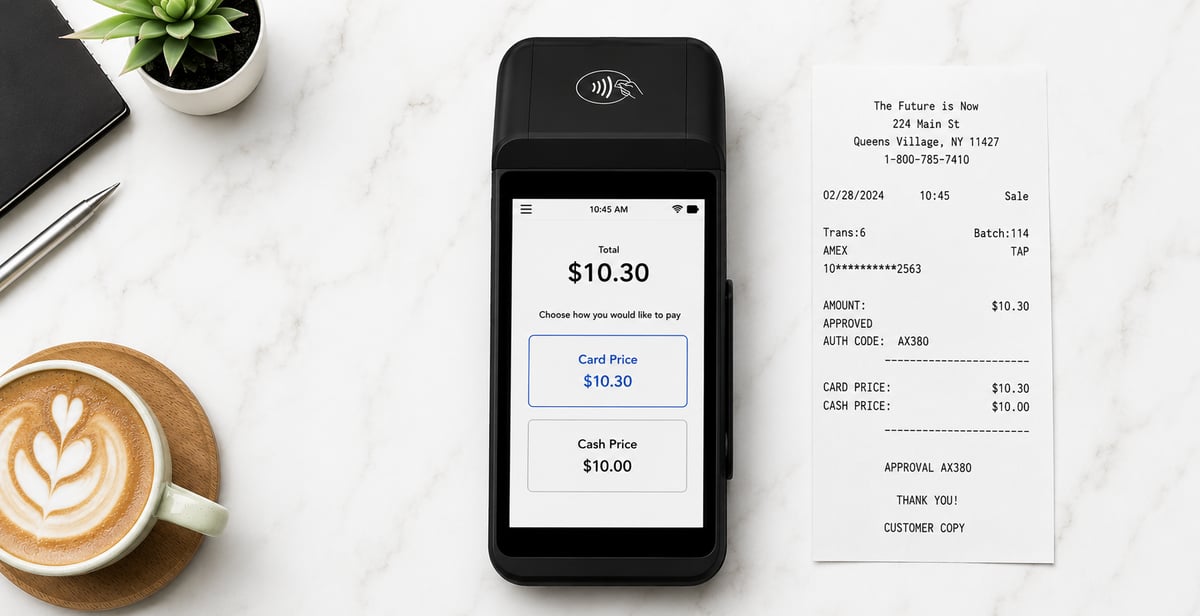
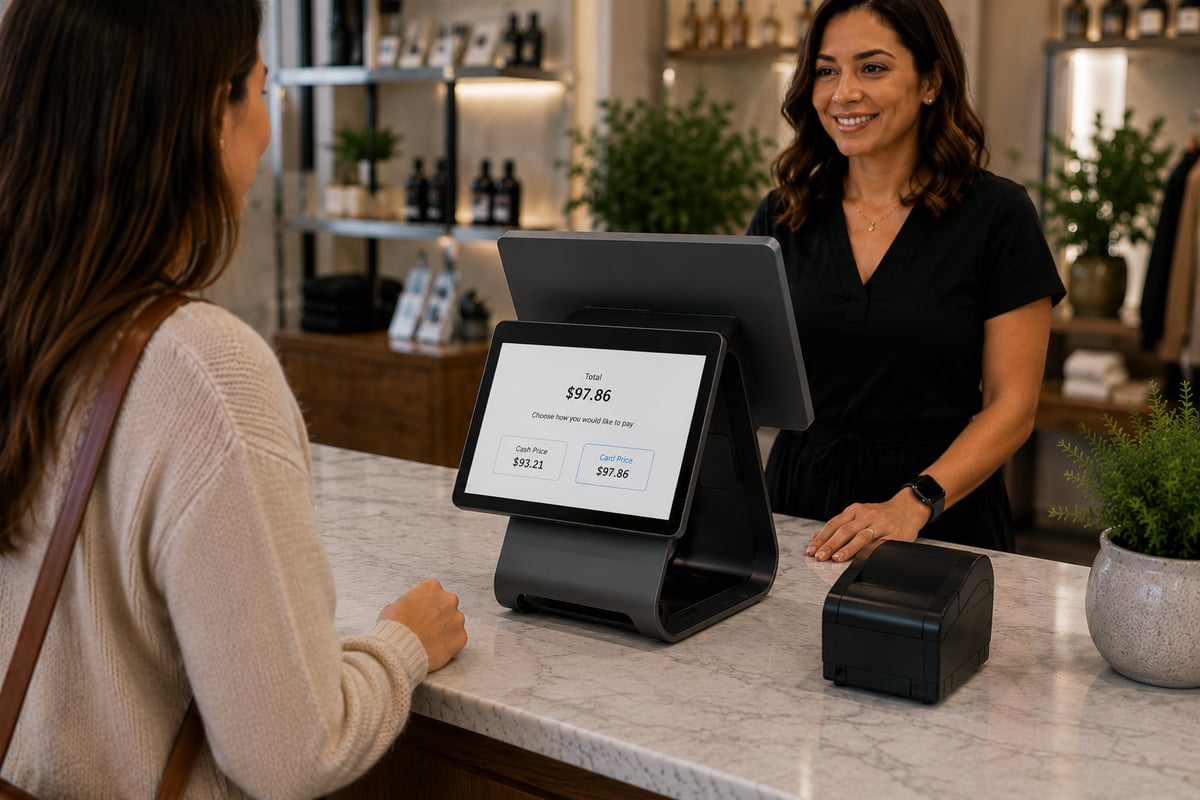
What Customers See at Checkout
Customers are presented with both the card price and cash price before selecting how they would like to pay.

All Dual Pricing Programs
Are Not Created Equal
True Dual Pricing can be implemented in more than one compliant way. The key is ensuring customers clearly understand their payment options before they choose how to pay.
Option 1: Both Prices Displayed
Display both the cash price and card price throughout your store on shelves, menus, signage, or digital displays, giving customers complete pricing transparency before they make a purchase.
Option 2: Single Card Price Displayed
Display only the card price throughout the store. Customers paying with cash receive the lower cash price at checkout, provided proper disclosures and signage are in place.
Option 3: No Posted Product Pricing
Businesses that do not display product pricing in-store may use required entrance and counter signage together with a properly configured terminal that clearly presents both prices before payment is selected.

Is Dual Pricing Right For My Business?
Pinpoint helps businesses implement compliant Dual Pricing programs that align with Visa, Mastercard, and applicable state requirements. Our team handles the setup, signage recommendations, receipt configuration, and staff training necessary to maintain compliance.
Retail & C-Stores
Smoke Shops & CBD

Beauty & Wellness

Food Trucks & QSR

Auto Related

Contractors & Field Services
Ready to See if Dual Pricing Is Right for Your Business?
We'll review your current processing costs, estimate your potential savings, and determine whether a compliant Dual Pricing program is the right fit for your operation.
Dual Pricing FAQs
Is Dual Pricing legal?
Yes. True Dual Pricing is generally legal across the United States when both the cash price and card price are clearly disclosed before purchase. Customers are shown both prices upfront and can choose their preferred payment method.Proper implementation is essential. Signage, receipt formatting, and point-of-sale configuration must all be set up correctly to ensure transparency and compliance. Pinpoint provides fully managed Dual Pricing implementations designed to meet card brand requirements and industry best practices.
Is Dual Pricing the same as surcharging?
No. Dual Pricing and surcharging are different programs.With surcharging, a fee is added only when a customer pays with a credit card. With Dual Pricing, businesses display both a cash price and a card price upfront, allowing customers to choose their preferred payment method before completing the transaction.Many businesses prefer Dual Pricing because it provides greater transparency and can be easier to implement compliantly when properly configured.
Will customers push back?
Most businesses experience little to no customer resistance when Dual Pricing is clearly communicated. Customers appreciate transparency and the ability to choose between paying with cash or card. In many cases, merchants find that customers quickly adapt to the program, especially when pricing and signage are displayed clearly.The biggest challenge we see isn't customer resistance—it's a lack of employee training. When business owners or staff don't fully understand how Dual Pricing works, they may struggle to explain it to customers, which can create confusion at checkout.That's why Pinpoint provides implementation guidance, staff education, and compliance support to help ensure a smooth rollout and positive customer experience.
How much can I save with Dual Pricing?
Savings vary based on your processing volume, average ticket size, and payment mix. Many businesses reduce or eliminate 80% to 100% of their credit card processing costs. Merchants processing higher monthly volumes often realize the greatest savings.Pinpoint provides a free statement analysis to estimate potential savings based on your current processing activity.
Do I need new equipment for Dual Pricing?
Not always. In some cases, existing payment terminals or POS systems can be reprogrammed to support Dual Pricing. However, certain systems may require updated software or replacement equipment to ensure proper receipt formatting, pricing transparency, and overall compliance.Many businesses are surprised to learn that their current setup was never designed to support true Dual Pricing. In fact, we frequently see merchants operating programs that are improperly configured or not fully compliant with card brand requirements, often because their existing hardware or software cannot properly display both cash and card prices.Using the wrong equipment or an improperly configured system can create customer confusion, compliance issues, and unnecessary risk.Before implementation, Pinpoint reviews your current payment environment, evaluates equipment compatibility, and recommends the best path forward to ensure your Dual Pricing program is transparent, compliant, and built for long-term success.
What states restrict Dual Pricing?
True Dual Pricing is generally permitted throughout the United States when implemented correctly. Unlike surcharging, Dual Pricing presents both the cash price and card price upfront, allowing customers to choose their preferred payment method before completing a purchase.The biggest area of confusion for business owners is implementation. Many merchants are sold programs marketed as "Dual Pricing" that are improperly configured, lack required disclosures, or fail to clearly present both prices to customers.That's why proper setup matters. Pinpoint helps businesses implement transparent Dual Pricing programs that include the appropriate signage, receipt formatting, and point-of-sale configuration needed to support a compliant customer experience.
How long does implementation take?
Most Dual Pricing programs can be implemented within a few days once underwriting is complete and equipment is ready. Existing merchants using compatible hardware may be able to transition even faster.Pinpoint handles setup, equipment programming, staff guidance, and compliance recommendations to ensure a smooth rollout.
Does Pinpoint help with compliance?
Yes. Compliance is one of the most important parts of a successful Dual Pricing program. Pinpoint assists with terminal and POS configuration, receipt formatting, required signage recommendations, and implementation guidance to help merchants maintain compliance with Visa, Mastercard, and applicable state requirements.
Can Dual Pricing work with my current POS system?
In many cases, yes. Dual Pricing can often be integrated with existing POS systems and payment terminals. Compatibility depends on your current hardware, software, and processor. Pinpoint evaluates your existing setup and determines whether your current system can support Dual Pricing or if upgrades are recommended.
What types of businesses use Dual Pricing?
Dual Pricing is commonly used by retail stores, restaurants, smoke shops, liquor stores, salons, auto repair businesses, convenience stores, professional service providers, and many other businesses that accept a high volume of card payments.Any business looking to reduce processing expenses while maintaining pricing transparency may be a good candidate.